Choosing a subject can take longer than drawing it. A random everyday object fixes that small but familiar problem: you receive a clear subject, then decide how you want to see it. You can copy the object carefully, simplify it into shapes, or use it as the beginning of a stranger scene.
Choose for meOpen the Random Object Generator→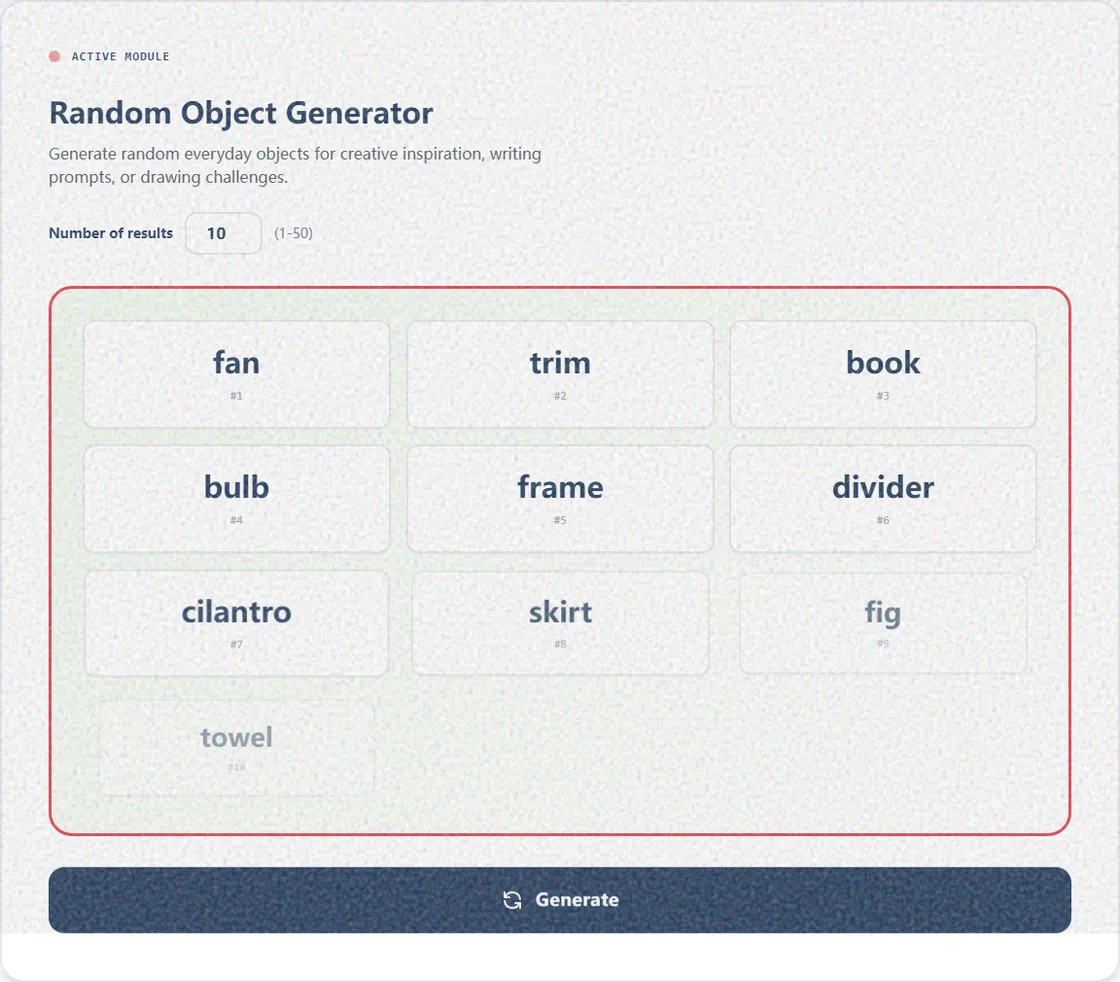
100 everyday objects for drawing practice
Use the groups as a rough difficulty guide, not a rule. A spoon can become difficult if you study every reflection; a bicycle can become simple if you draw only its silhouette.
Simple shapes
- Mug
- Book
- Envelope
- Candle
- Button
- Dice
- Plate
- Pencil
- Soap bar
- Gift box
Desk and school
- Stapler
- Scissors
- Notebook
- Ruler
- Paper clip
- Backpack
- Calculator
- Desk lamp
- Paintbrush
- Pencil sharpener
Kitchen objects
- Teapot
- Whisk
- Colander
- Toaster
- Rolling pin
- Measuring cup
- Frying pan
- Oven mitt
- Salt shaker
- Wooden spoon
Things you wear
- Sneaker
- Glove
- Watch
- Baseball cap
- Sunglasses
- Scarf
- Belt
- Boot
- Raincoat
- Headphones
Around the house
- Key
- Clock
- Door handle
- Houseplant
- Pillow
- Umbrella
- Remote control
- Clothes hanger
- Picture frame
- Table fan
Tools and hardware
- Hammer
- Padlock
- Tape measure
- Screwdriver
- Pliers
- Paint roller
- Flashlight
- Garden trowel
- Toolbox
- Extension cord
Out and about
- Mailbox
- Traffic cone
- Parking meter
- Bench
- Street sign
- Shopping cart
- Fire hydrant
- Suitcase
- Bus stop
- Bicycle helmet
Curves and reflections
- Glass bottle
- Metal spoon
- Kettle
- Light bulb
- Perfume bottle
- Magnifying glass
- Camera lens
- Snow globe
- Wine glass
- Chrome faucet
Mechanical details
- Bicycle
- Typewriter
- Alarm clock
- Can opener
- Film camera
- Sewing machine
- Electric drill
- Desk fan
- Binoculars
- Folding chair
Odd little challenges
- Crumpled receipt
- Tangled earphones
- Half-open zipper
- Stack of cups
- Open toolbox
- Wet umbrella
- Chair with a coat
- Keys on a ring
- Peeling label
- Open snack bag
Five ways to make an ordinary object interesting
- Change the viewpoint. Draw it from floor level, directly above, or so close that the object runs beyond the page.
- Change the scale. Turn a key into a bridge, a mug into a building, or a paper clip into a sculpture.
- Add evidence of use. A clean shoe is a product sketch. A muddy shoe with a loose lace suggests that something happened.
- Limit your marks. Try one continuous line, ten straight lines, or only light and shadow.
- Give it a neighbor. Generate a second object and invent a believable reason for the pair to share the scene.
A useful rule: if you reject three objects in a row, draw the fourth. The exercise works best when the subject is not the one you would have chosen yourself.
A 15-minute object drawing routine
- Generate one object and spend one minute noticing its largest shapes.
- Make three 30-second thumbnails from different viewpoints.
- Choose one thumbnail and draw for eight minutes.
- Use the final four minutes to strengthen the darkest values and clean up the silhouette.
- Write one sentence about what you would change next time.
If you want a fuller scene instead of a single item, switch to the Drawing Prompts Generator. It gives you a complete prompt rather than one object.
Ready to sketch?Generate a random object and draw the first result→